Brooklyn
Brooklyn Heights
America's First Historic District
Neighborhood Guide
Living in Brooklyn Heights, Brooklyn NY
Brooklyn Heights is one of the most beautiful and best-preserved residential neighborhoods in New York City. Set on the bluff above the East River, it offers something that has become genuinely scarce in the modern city: consistent nineteenth-century streetscapes, low-rise scale, mature trees, and a quiet that feels improbable given that Lower Manhattan sits a single subway stop away.
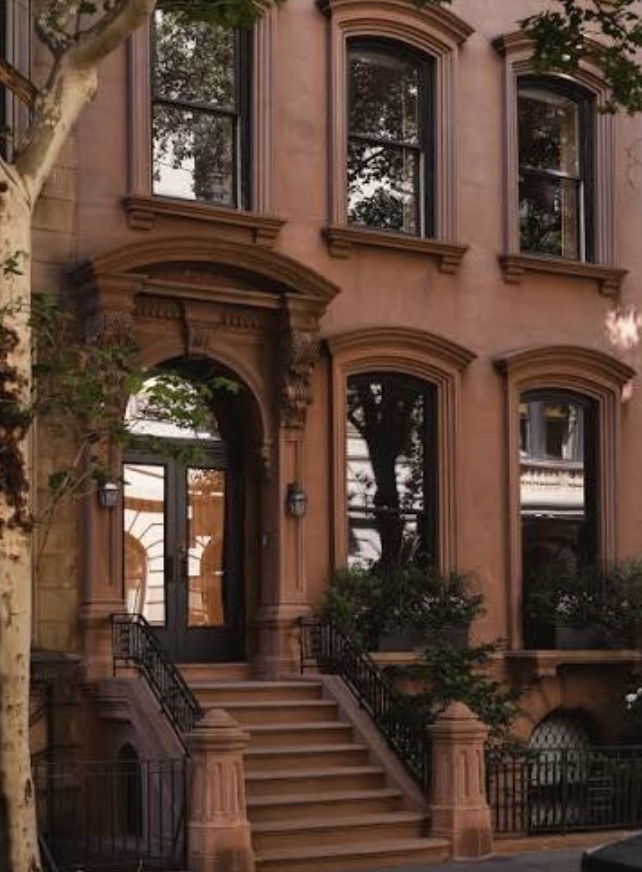
The neighborhood became America's first designated historic district in 1965, and that protection preserved block after block of Federal, Greek Revival, Italianate, and Gothic Revival row houses built between the 1820s and 1860s. Nearly nothing has been permitted to interrupt them since, which is why the Heights looks today much as it did a century ago.
For buyers, Brooklyn Heights represents a different proposition than the towers of Downtown Brooklyn a few blocks east. Inventory is predominantly prewar co-ops and landmarked townhouses rather than new development, values have historically been exceptionally stable, and the neighborhood attracts people who are choosing it deliberately and tend to stay for decades.
That stability is a function of scarcity. Landmark restrictions limit alteration and effectively prohibit new construction at scale, so supply barely changes from year to year while demand for the neighborhood's particular combination of architecture, calm, and commute continues to grow.
The trade-off is that buying here requires patience and, in most cases, comfort with co-op ownership and board approval. Townhouses trade infrequently and command significant premiums. The buyers who do best in Brooklyn Heights are the ones who understand the market's rhythms before an apartment they want comes to market — not after.
Neighborhood Highlights
- America's first designated historic district (1965)
- The Brooklyn Heights Promenade — harbor and skyline views
- Brooklyn Bridge Park — 85 acres of waterfront recreation
- Federal, Greek Revival, and Italianate row houses
- Prewar co-ops, landmarked townhouses, and select conversions
- 2, 3, 4, 5, R, A, C trains — one stop to Lower Manhattan
- Montague, Henry, and Clark Street dining and retail
- Plymouth Church and deep Underground Railroad history
A Brief History of Brooklyn Heights
Brooklyn Heights is often described as America's first suburb, and the claim is close to literal. When Robert Fulton's steam ferry began regular service to Manhattan in 1814, the farmland on the bluff above the river became newly practical for merchants who worked downtown, and developers began laying out streets almost immediately. The row houses that followed — Federal first, then Greek Revival, Italianate, and Gothic Revival — went up in a concentrated burst between the 1820s and 1860s.
The neighborhood was also a center of nineteenth-century abolitionism. Plymouth Church, under Henry Ward Beecher, became one of the most influential anti-slavery congregations in the country and served as a documented stop on the Underground Railroad. Beecher staged mock slave auctions from the pulpit to raise money for emancipation, and Abraham Lincoln worshipped there twice.
By the mid-twentieth century the Heights faced the pressures that reshaped much of New York. Robert Moses routed the Brooklyn–Queens Expressway through the waterfront, and the compromise that emerged — cantilevering a public walkway above the roadway — produced the Promenade in 1951, now among the finest civic spaces in the city.
In 1965, in the wave of preservation sentiment that followed the demolition of Penn Station, Brooklyn Heights was designated New York City's first historic district. That decision is the single most important fact about the neighborhood's real estate: it froze the streetscape, constrained supply permanently, and preserved an architectural coherence that no other neighborhood in the city can quite match.
Its literary tenancy is nearly as storied as its architecture. Truman Capote wrote In Cold Blood in a basement apartment on Willow Street. Norman Mailer, W. H. Auden, Arthur Miller, and Carson McCullers all lived and worked within a few blocks of one another.
Why People Love Living in Brooklyn Heights
Residents tend to describe Brooklyn Heights the same way: it feels like a small town that happens to sit across the water from the financial capital of the world. The streets are quiet, the scale is human, and the commute is among the shortest in the city.
Brooklyn Heights appeals to residents who value:
- Landmark-protected architecture and a consistent, unhurried streetscape
- The Promenade — a third of a mile of harbor and skyline views
- Brooklyn Bridge Park at the foot of the neighborhood
- One of the shortest commutes to Lower Manhattan anywhere in the city
- Exceptional public and independent schools
- Quiet residential blocks with genuine neighborhood community
- Historically stable values with very limited new supply
- Walkable to DUMBO, Cobble Hill, Boerum Hill, and Downtown Brooklyn
Transportation & Accessibility
Brooklyn Heights offers one of the shortest commutes to Lower Manhattan of any residential neighborhood in New York City. From Clark Street, the 2 and 3 reach Wall Street in a single stop beneath the river.
Residents have access to:
- 2, 3 trains at Clark Street — one stop to Wall Street and Lower Manhattan
- 4, 5 trains at Borough Hall
- R train at Court Street
- A, C, F trains a short walk east at Jay Street–MetroTech
- NYC Ferry from Brooklyn Bridge Park (Pier 6) and DUMBO
- The Brooklyn Bridge is walkable from the northern end of the neighborhood
- Quick access to the BQE, Brooklyn–Battery Tunnel, and Manhattan Bridge
Restaurants, Dining & Everyday Lifestyle
Brooklyn Heights dining is neighborhood dining — steady, local, and unhurried rather than destination-driven. What it lacks in scene it makes up for in proximity: Atlantic Avenue, Cobble Hill, Boerum Hill, and DUMBO are all within a comfortable walk, which effectively triples the options.
Neighborhood favorites and corridors include:
- Montague Street — the neighborhood's traditional commercial spine, with cafés, casual dining, and everyday retail
- Henry Street and Hicks Street — quieter, more local, and where many residents actually eat
- Henry's End — a Brooklyn Heights institution known for game dishes and a long-running wine program
- Colonie on Atlantic Avenue — seasonal, ingredient-driven cooking at the neighborhood's southern edge
- Sottocasa Pizzeria for Neapolitan pies, and Teresa's for long-standing Polish diner comfort food
- Court Street and Atlantic Avenue extend the options south toward Cobble Hill and Boerum Hill
- DUMBO's waterfront dining — including Time Out Market — is a ten-minute walk north
Daily conveniences include:
- Key Food and neighborhood grocers on Montague and Henry Streets
- Trader Joe's on Court Street at the Cobble Hill border
- Brooklyn Public Library's Business & Career Library at Cadman Plaza
- Pharmacies, hardware, dry cleaning, and everyday services within a few blocks
- Court Street retail corridor for banking, fitness, and services
Parks, Culture & Things To Do
Few neighborhoods in New York City have this much accessible open space. The Promenade runs along the western edge, and Brooklyn Bridge Park unfolds directly below it along the water.
Outdoor destinations include:
- The Brooklyn Heights Promenade — cantilevered over the expressway in 1951, with continuous views of the harbor, the Statue of Liberty, and the Lower Manhattan skyline
- Brooklyn Bridge Park — 85 acres of piers, lawns, playgrounds, sports courts, and waterfront paths directly below the neighborhood
- Cadman Plaza Park — open lawn, greenmarket, and the neighborhood's eastern gateway
- Pierrepont Playground and Harry Chapin Playground for families
- Squibb Park Bridge connecting the Heights directly down to the waterfront
Cultural & educational institutions:
- Plymouth Church — Henry Ward Beecher's abolitionist congregation and a documented stop on the Underground Railroad
- The Center for Brooklyn History, in the landmarked former Brooklyn Historical Society building
- Packer Collegiate Institute, St. Ann's School, and Brooklyn Friends School
- PS 8 and other well-regarded public schools serving the neighborhood
- Brooklyn Bridge Park Conservancy programming along the waterfront
Real Estate in Brooklyn Heights
Brooklyn Heights is a co-op and townhouse market first. Unlike Downtown Brooklyn a few blocks east, where new condominium towers dominate, the Heights offers prewar buildings, landmarked row houses, and a small number of conversions — with landmark status ensuring that supply stays essentially fixed.
What buyers will find here:
- Landmarked townhouses on Willow, Hicks, Remsen, Pierrepont, Columbia Heights, and the fruit streets — Pineapple, Orange, and Cranberry.
- One Brooklyn Bridge Park (360 Furman Street) — the neighborhood's largest condominium, a warehouse conversion with direct park frontage and full-service amenities.
- The Standish (171 Columbia Heights) — a former hotel converted to condominiums, with harbor views and prewar proportions.
- Cadman Towers, 75 Henry Street, and the Heights' larger postwar co-op complexes, which offer the most attainable entry point in the neighborhood.
- Small prewar co-op buildings throughout the historic district, many with a handful of units and distinctive original detail.
Because most of the inventory is co-op, buyers should plan for board approval — including financial requirements, a board package, and in most buildings an interview. Our guide to the NYC co-op board approval process covers what specific buildings look for, and our closing costs breakdown explains why a co-op purchase closes for meaningfully less than a comparable condo.
For buyers weighing the Heights against neighboring options, it is worth walking Downtown Brooklyn and DUMBO in the same afternoon. They are minutes apart and offer genuinely different housing, price points, and daily rhythms.
Why Brooklyn Heights Remains One of New York's Most Enduring Neighborhoods
Most New York neighborhoods change character every decade or so. Brooklyn Heights has changed remarkably little in sixty years, and that is precisely the point — the 1965 designation ensured that what makes it desirable cannot be built away.
Few neighborhoods offer the same combination of:
- Architecture protected by landmark status rather than trend
- Waterfront park and Promenade access at the doorstep
- One of the shortest Lower Manhattan commutes in New York City
- Predominantly co-op and townhouse ownership, with limited new supply
- Strong schools and a stable, long-tenured resident community
- Genuine quiet within minutes of Downtown Brooklyn and DUMBO
Buyers come to Brooklyn Heights for the architecture and the views. They stay because of the quiet, the schools, and the fact that a neighborhood this settled is very difficult to find anywhere else within one subway stop of Lower Manhattan.
Brooklyn Heights & Brownstone Brooklyn
Work With The Miller Markowicz Team
Brooklyn Heights rewards agents who understand its particulars — which buildings have restrictive boards, how landmark status affects what you can and cannot do to a townhouse, and why two apparently similar co-ops can trade at very different numbers.
Andreea Miller and Steven Markowicz work across brownstone Brooklyn and the neighborhoods immediately surrounding the Heights, with deep transaction experience in Downtown Brooklyn, Boerum Hill, DUMBO, and Cobble Hill, and extensive co-op and townhouse expertise across Manhattan and Brooklyn.
We are candid about fit. If Brooklyn Heights is right for you, we will tell you which blocks and which buildings suit what you are after. If a neighboring market serves you better, we will tell you that too.
Whether you are buying, selling, or simply trying to understand how this market works, we are glad to share our perspective.
Thinking of Buying or Selling in NYC?
Whether you're searching for your dream home or looking to sell at the best possible price, The Miller Markowicz Team is here to guide you every step of the way.